CASE STUDIES
ROOTED IN RELATIONSHIP: WAHKOHTOWIN BOREAL CARBON PROJECT
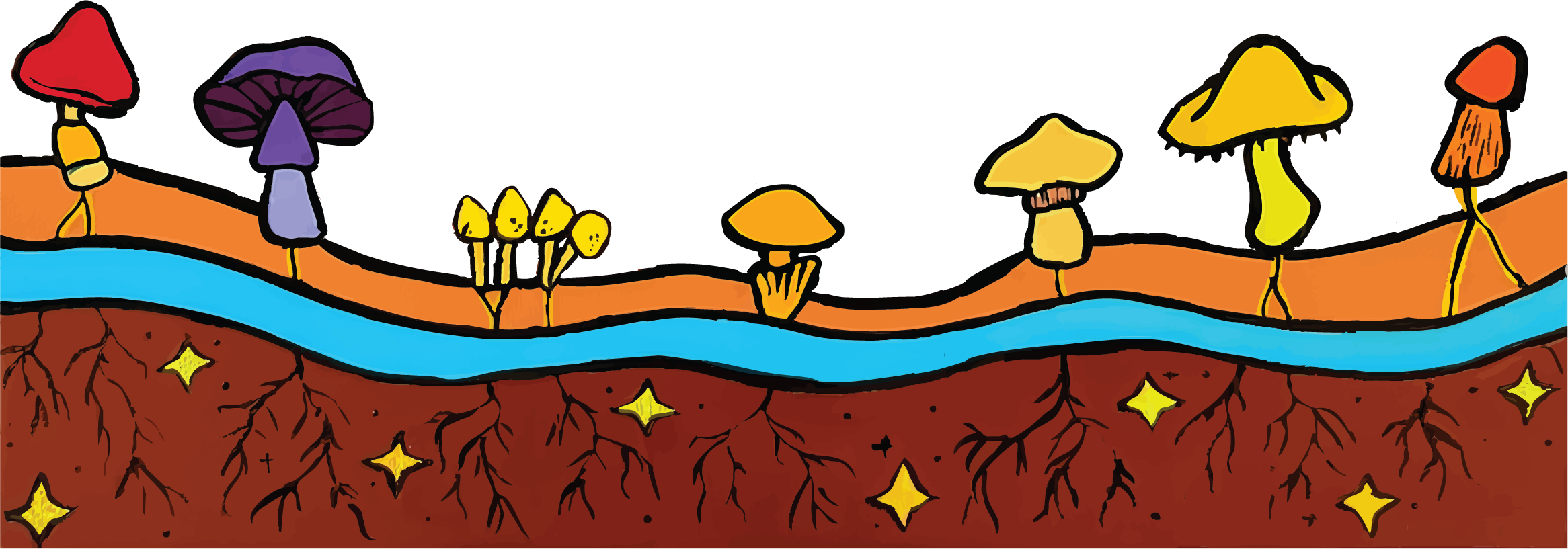
What do Natural Climate Solutions look like in Treaty 9 territory? Here’s an innovative example led by the First Nations-owned company, Wahkohtowin Development. Consistent with their stewardship economy strategy with Mikro-Tek, Wahkohtowin is tapping into mycorrhizae – the natural partnership between soil fungi and plant roots. The project involves applying mycorrhizal fungi to tree seedlings, strengthening the living networks beneath the soil that allow forests to thrive. By improving tree survival and growth, this nature-based technology improves forest health and increases carbon storage, offering a new carbon-credit revenue stream for shareholder Nations.
Learn about the innovation, challenges and opportunities ahead, as Wahkohtowin advocates for clearer pathways for Indigenous Nations to both lead and benefit from the carbon projects happening in their own territories. Read the case study and scroll down to watch the film and listen to the two-part podcast episode!
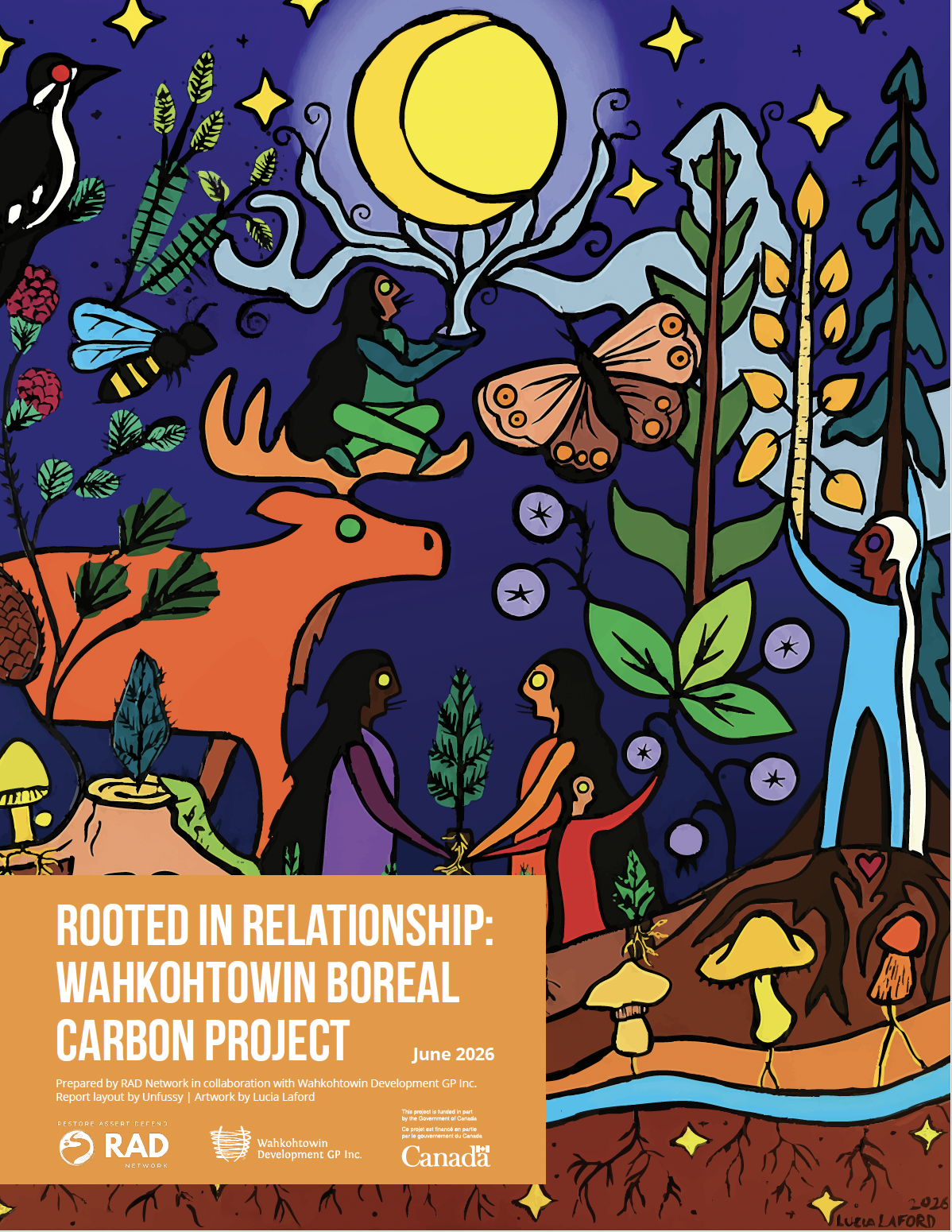
Report prepared by RAD Network in collaboration with Wahkohtowin Development GP Inc. Artwork by Lucia Laford.
For a deeper dive, watch the film, above, and check out the two-part podcast episode on the RAD Story Lodge podcast. In Part 1: The Fungal Factor we hear how mycorrhizal technology can strengthen the living networks beneath the forest floor. In Part 2: Wahkohtowin, David Flood and Leigh Fox tell us how Wahkohtowin is applying this in the Boreal. They take us to the heart of the vision: a new kind of economy, rooted in Indigenous rights and responsibilities, where young people are called home to meaningful work on the land. Adrian Perreault reflects on her experience, offering a firsthand perspective supporting the initiative as a Guardian.
Indigenous Rights & Carbon Projects on “Crown” Land
The work is well underway with millions of trees already in the ground and Wahkohtowin Development intends to register and sell carbon credits. Yet, a central challenge remains: they have to prove the right to benefit from the carbon project, which was initiated on “Crown” land within Treaty 9 territory.
To register carbon offset credits, projects must show who owns the credits. This is pretty clear when the land is privately owned, but over 88% of Canada is considered “Crown” or public land. At the same time, all of Canada is Indigenous traditional territory and Indigenous Peoples have constitutionally and internationally recognized rights. Unclear rules make it difficult for Indigenous Nations to move projects forward.
Click below to check out our infosheet which breaks down this critical barrier and associated opportunities.