The Story of the RAD Vision Basket
In April 2023, more than eighty Indigenous leaders, Knowledge Carriers, land stewards, and partners gathered in Sitansisk (Fredericton, New Brunswick) on the unceded and unsurrendered lands of the Wolastoqiyik for the RAD Vision Gathering. The gathering was convened to create space to listen together for what was emerging for Indigenous-led regenerative futures across Turtle Island.
The gathering opened in ceremony beside the Wolastoq River, guided by Elders and Knowledge Keepers including Elder Ed Perley, Elder Ramona Nicholas, Elder Marina Moulton, Elder Alex Moulton, Elder Norman Bernard, and Elder Tina Perley Martin, with the gathering convened locally by Patricia Saulis. Their presence grounded the gathering in local law, protocol, and responsibility, ensuring that what unfolded was held in a good way; accountable to land, water, community, and Spirit.
Before the gathering formally began, members of the RAD core team worked alongside the Elders to prepare tobacco ties for all who would participate. This work itself became part of the ceremony, reinforcing that the gathering would be shaped through care, relationship, and shared responsibility.
At the centre of the gathering, Wolastoqiyik Knowledge Carrier and scholar Terry Young from Kingsclear First Nation quietly began weaving an ash basket as the conversations unfolded.
Prior to the gathering, participants had been invited to bring small amounts of soil from their home territories. One by one, in ceremony, each person added their soil to a glass jar placed in the centre of the circle. Each offering of soil carried the history, relationships, and responsibilities of the lands and waters it came from. Once combined, they could never be separated again. The jar became a vessel holding the presence of lands and peoples from coast to coast to coast.
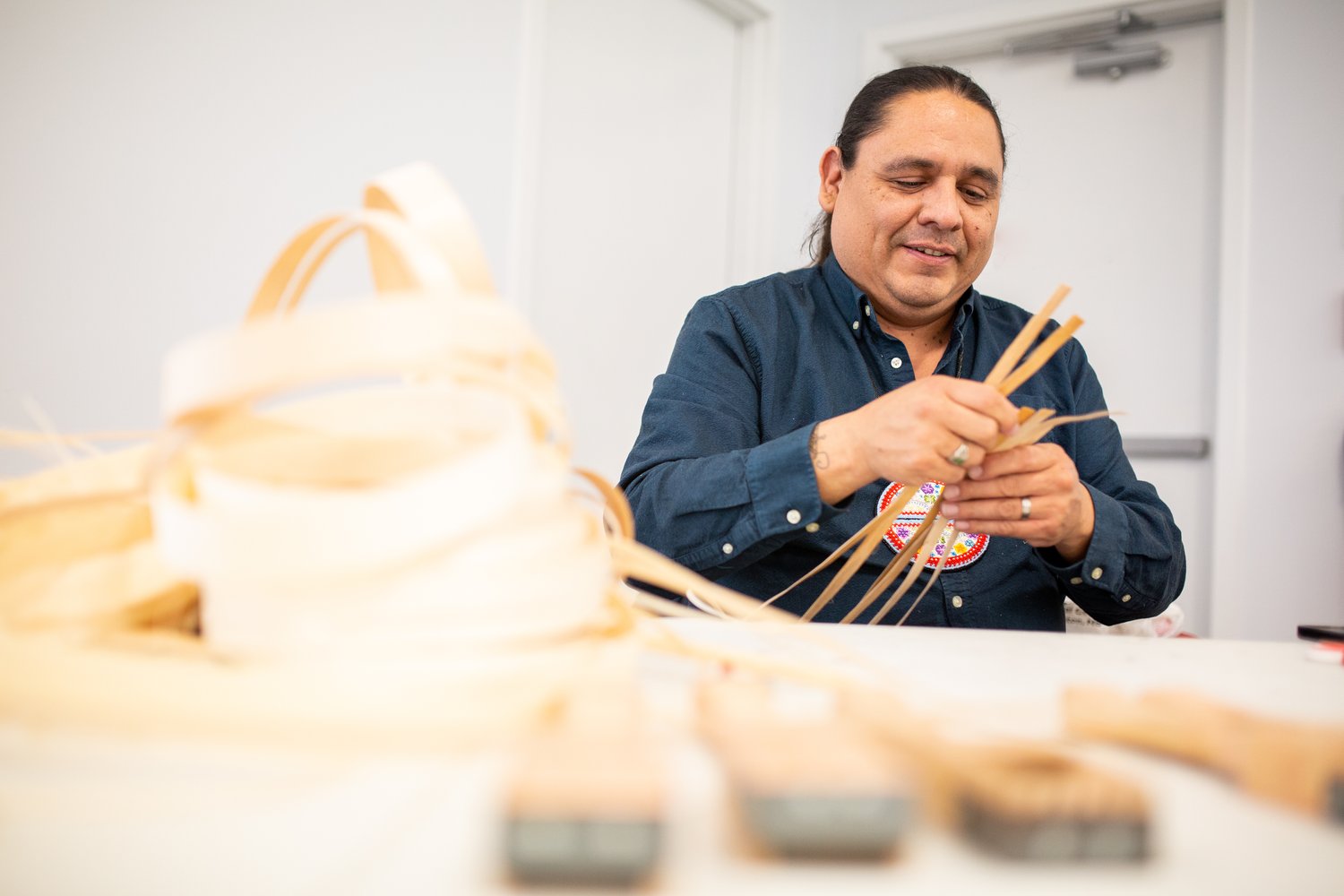

Left: Terry Young starts weaving; right: Adding soil to the earth vessel. Photos by Mag Hood.
As the conversations deepened, Terry began weaving the ash basket around the jar and over the course of the gathering the basket slowly took shape. Ash is not an incidental material. It bends without breaking and remembers the shape it is given. Each strip is strong on its own, but it becomes capable of holding weight only through relationship with the others. A basket emerges from tension held well. As the weaving continued, the basket began to mirror what was unfolding among the participants. The strands represented the people gathered in the room and the relationships forming between them.
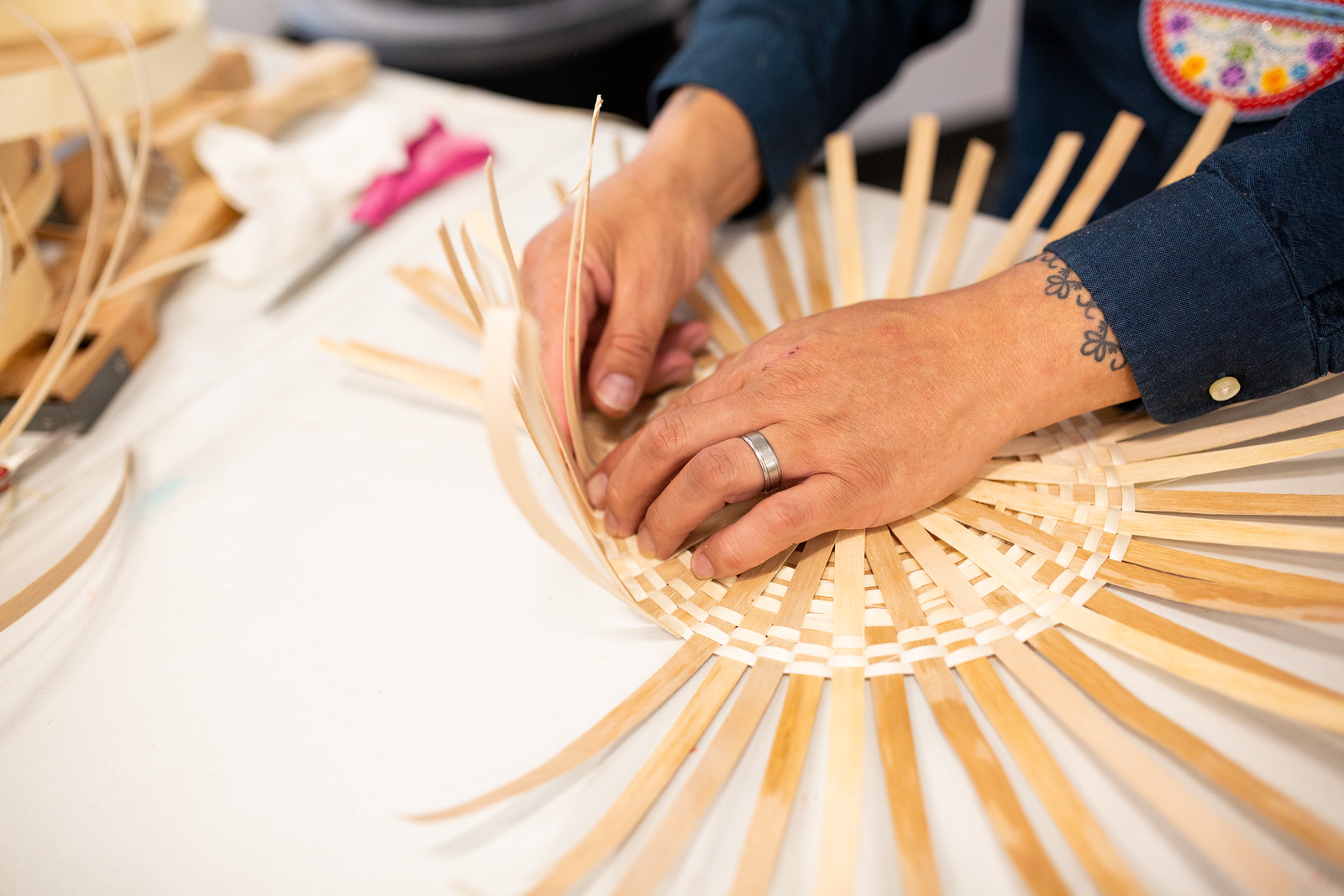
Later, when the RAD team reconnected with Terry he reflected on how the basket had emerged through listening. As he wove, he was hearing the conversations in the room and allowing the form of the basket to respond to the collective energy of the gathering. Basketmaking, he explained, follows a rhythm that cannot be forced. The structure of the weave sets the conditions for what is possible. The maker must respect the order within the materials themselves. In this way, the basket became not only an object created during the gathering, but a teaching about the process of collective creation itself.
As Erin Dixon, who facilitated the gathering, later reflected, something shifted whenever Terry spoke about the weaving, the conversations slowed. Participants began to recognize that they themselves were also weaving something together; relationships, ideas, and responsibilities forming strand by strand.
The gathering was also shaped by the presence of the emerging RAD leadership: Steven Nitah, David Flood, Sam Whiteye, Dani Warren, and Gwen Bridge, alongside Elders from other regions including Elder Albert Marshall and Elder Larry McDermott, whose teachings grounded the work in responsibility, natural law, and intergenerational accountability.
By the end of the gathering, the basket containing the soils had become a powerful symbol of the shared vision that was emerging; it was a container capable of holding many territories and perspectives without collapsing them into a single approach.
When Elder Ed Perley reflected again on the Vision Basket in December 2025, he described it as a metaphor not only for the people gathered, but for the value system that holds communities together. Watching the basket take shape during the gathering, he said it reminded him of how a spider begins its web, with a single strand. From that first strand, the structure gradually grows stronger as more threads are added. In the same way, each person who came to the gathering brought their own strand, contributing to a structure that became stronger through relationship. Looking at the edges and frills of the basket, Elder Ed saw them as representing the individuals who had participated in the gathering, each strand forming part of a larger collective whole.
He also spoke about the deeper meaning embedded within the basket’s structure. The sixteen structural strands in the basket correspond to the sixteen values that guide Wolastoq life. Each strand represents a value that helps sustain the integrity of the whole. Elder Ed explained that this principle is reflected in many Indigenous cultural practices. In the building of a wigwam or sweat lodge, each pole represents a value that contributes to the strength and stability of the structure. Teachings such as Seven Grandfather Teachings are not abstract ideas, they are guiding principles embedded in everyday practices, ceremonies, and relationships with the land.
Through this lens, the Vision Basket reflects not only the relationships between people who gathered, but also the deeper ethical framework that holds those relationships together. At the centre of the basket rests an eagle feather. In many teachings the eagle carries the value of love, reminding us that love is the ground of being that has guided RAD from the beginning.
For Elder Ramona Nicholas, memories of the gathering centre less on the specific discussions that took place and more on the ceremonial container that held everything together.
Her role during the gathering was rooted in ceremony and helping maintain spiritual balance. When she reflects back, she remembers the small ceremonial moments that unfolded throughout the days together, which formed the spiritual foundation that made the gathering possible.
One of the moments that stood out most strongly for her was watching Terry Young weave the basket quietly in the background while listening to the conversations happening in the room. For Elder Ramona, this became a powerful symbol of what was unfolding. She remembers that the basket emerged organically as people shared their stories, ideas, and intentions. In her words, “everybody bringing in different pieces created something.” One of her most vivid memories is the collective snake dance that participants performed together around the hill during the gathering. For her, that moment symbolized the movement and collective energy that had emerged among the people gathered there. Taken together, Ramona’s reflections remind us that the Vision Gathering was a weaving of ceremony, conversation, craft, and community to create something that continues to move forward in ways that are still unfolding.
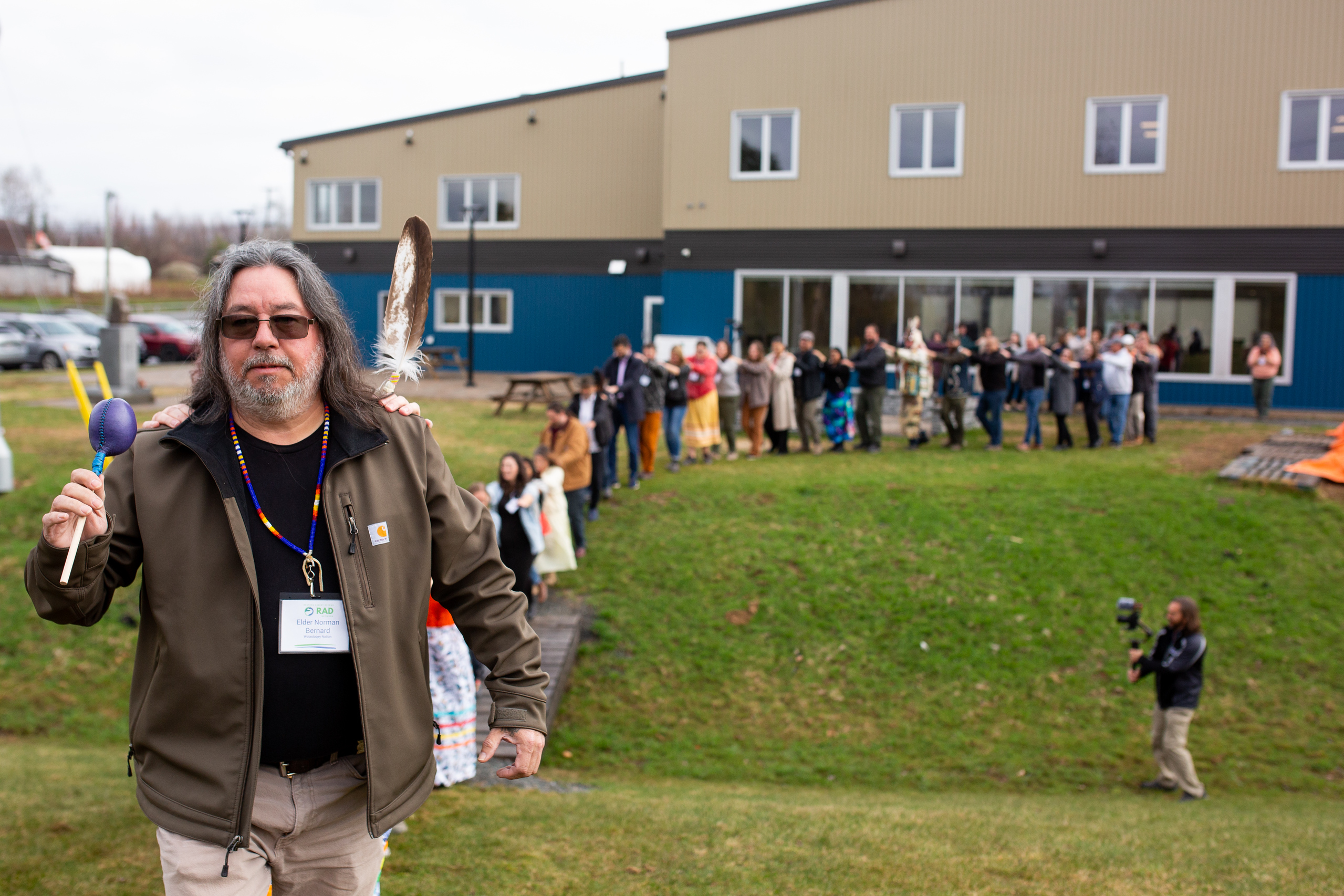
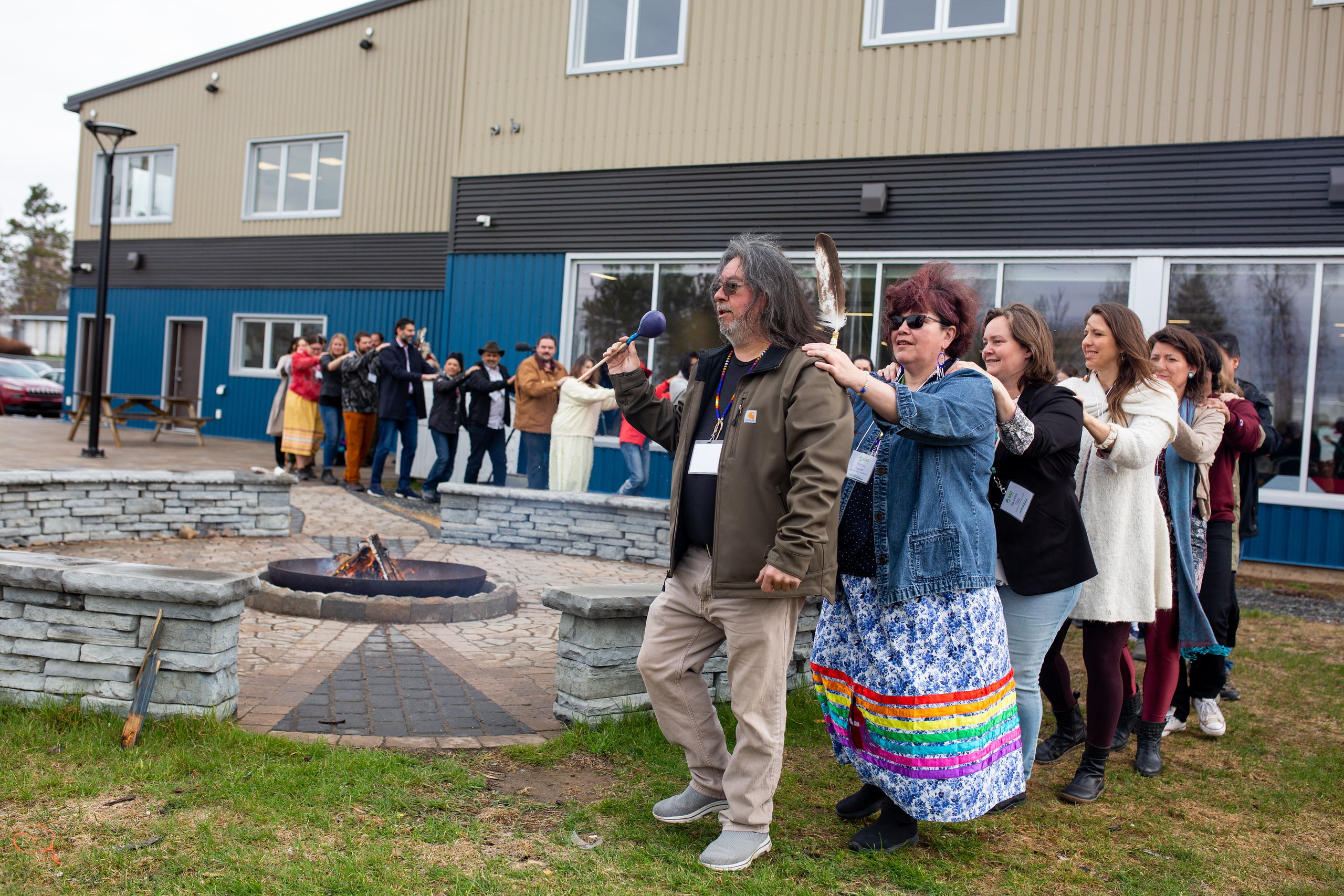
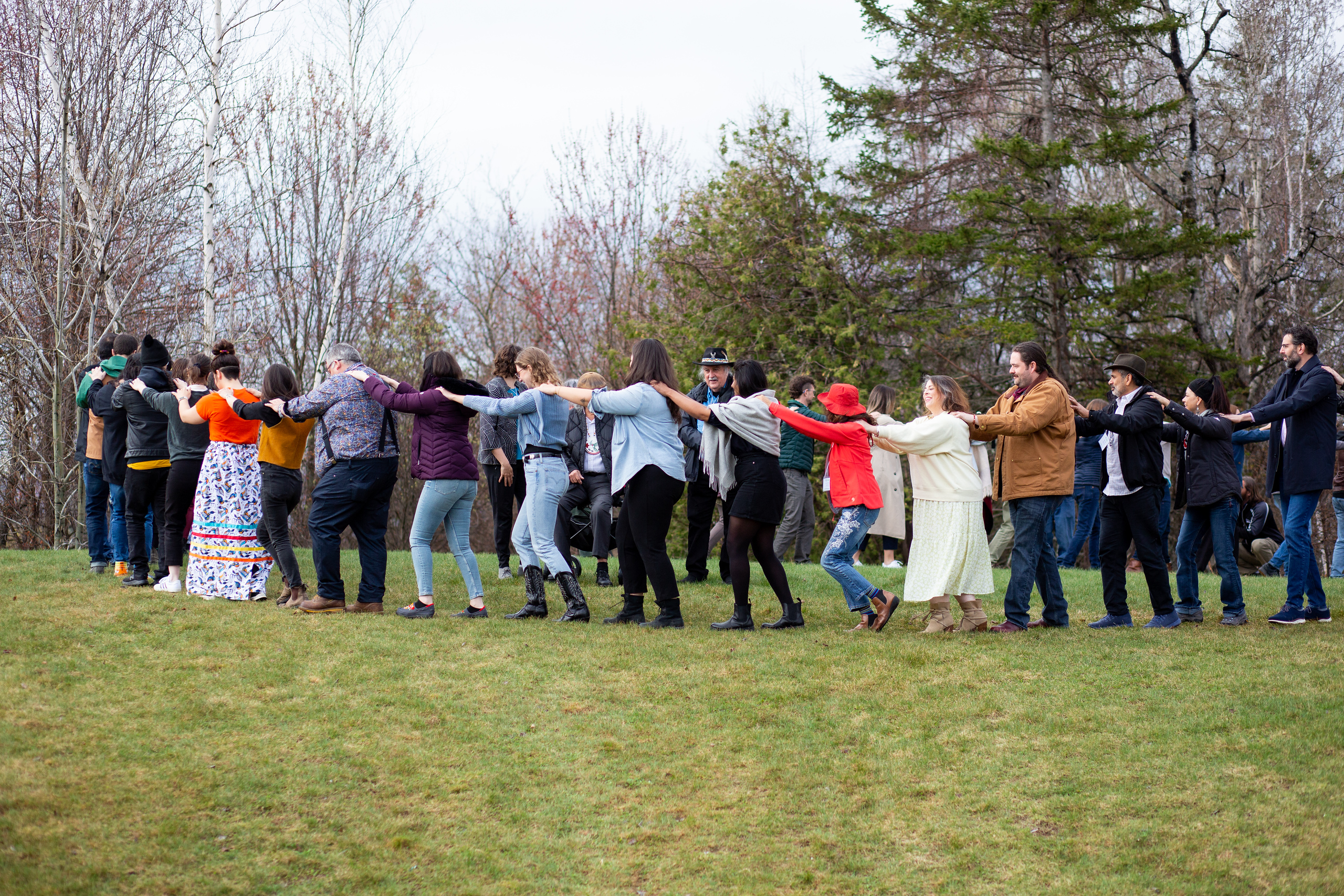
Elder Norman Bernard leads us in a snake dance. Photos by Mag Hood.
At the close of the gathering, teachings were given that the basket would eventually move in a snake dance across Turtle Island, travelling across lands and waters and helping create space for healing and land-based visions to emerge. This teaching was embodied through a collective snake dance led by Elder Norman Bernard, with Elder Ed Perley on the drum and Dani Warren on the bagpipes. Participants moved together around the sacred fire and up a hill where Elders Albert Marshall and Larry McDermott waited to close the gathering. The dance symbolized how the work would move forward; not in a straight line, but through relationship, movement, and renewal across the lands and waters.
Following the gathering, the Vision Basket was carried to Unama’ki (Cape Breton) where it was cared for by Trish Nash at the Unama’ki Institute of Natural Resources until the next phase of the journey revealed itself.
The Basket Begins to Move
In October 2025, members of the RAD team travelled with gifts to visit Elders Alex and Marina Moulton, Patricia Saulis, and Ed Perley to seek guidance on the next steps for the Vision Basket. Soon after, members of the RAD team travelled with Elder Ed Perley to Membertou for the Assembly of First Nations gathering.
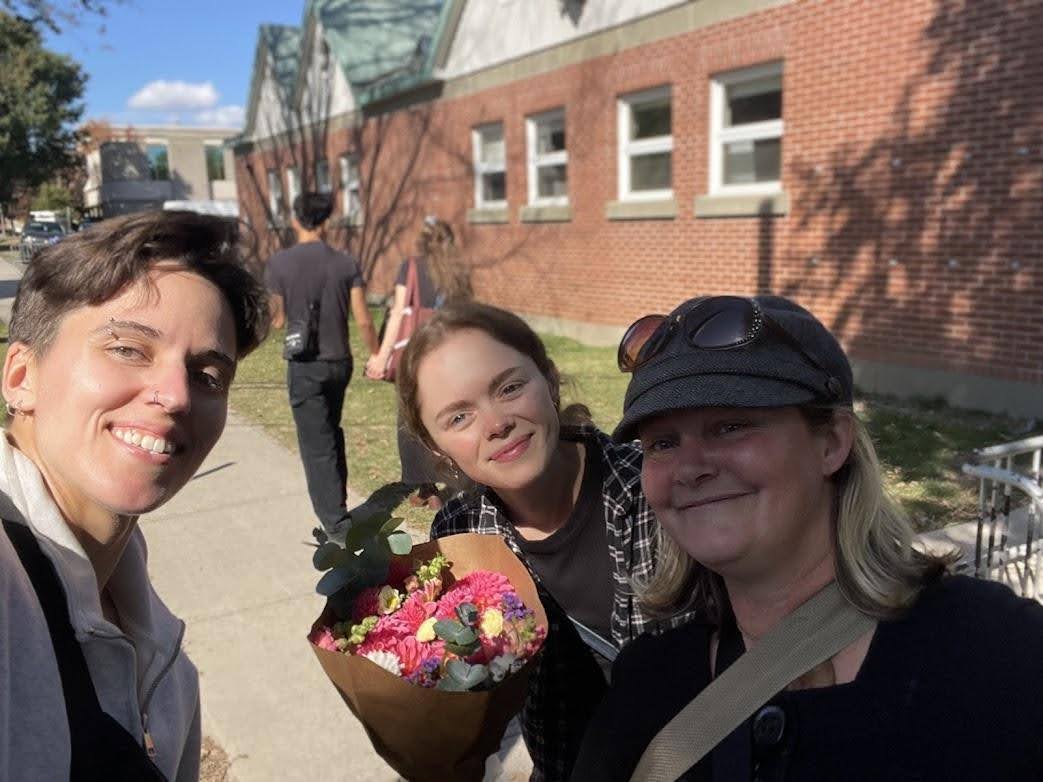
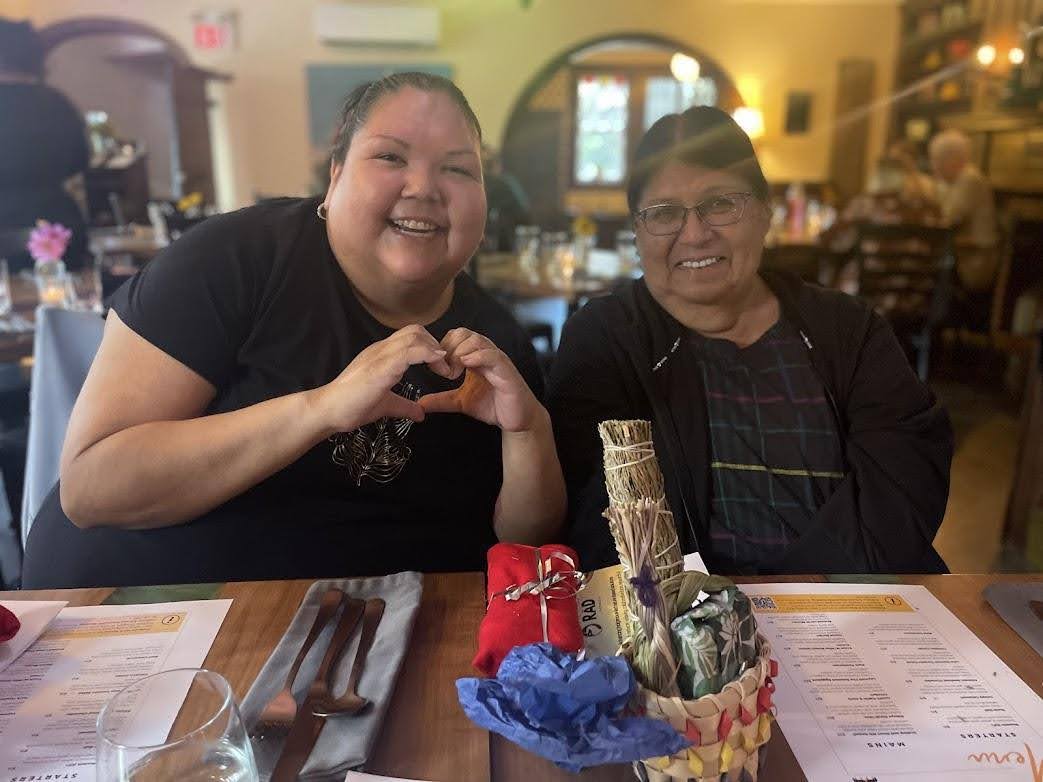
Left: RAD team members travel East; right: Elders Alex and Marina Moulton.
Along the way they stopped at Black Beach outside of St. John’s, a place the group had visited together following the Vision Gathering. Standing on the land beside the water, tobacco was offered and a question that had been quietly circulating within the network was spoken aloud: What if carbon were understood not as a commodity, but as a relative within the living systems of the Earth? Sand from the black beach was gathered to accompany the Vision Basket as part of its growing bundle.
While in Membertou, Steven Nitah met with Elder Ed Perley and Elder Albert Marshall, and together they revisited the teachings of the Vision Basket and the instruction that it would eventually begin its snake dance across Turtle Island. Together, they agreed that the time had come for the basket to move. Responsibility for caring for the Vision Basket on this journey was entrusted to Erin Dixon, who now serves as Wise Practices Lead for the RAD Network.

Elder Ed Perley
In December 2025, Erin, Mary-Kate, and Jas returned to Sitansisk where the basket was brought by Elder Ed back to the Wolastoq River and feasted with ceremony before beginning the next stage of its journey. Erin lifted her pipe as Elder Ed sang the honour song, four eagles circled overhead and in that moment, the Vision Basket began the next phase of its meandering journey westward.
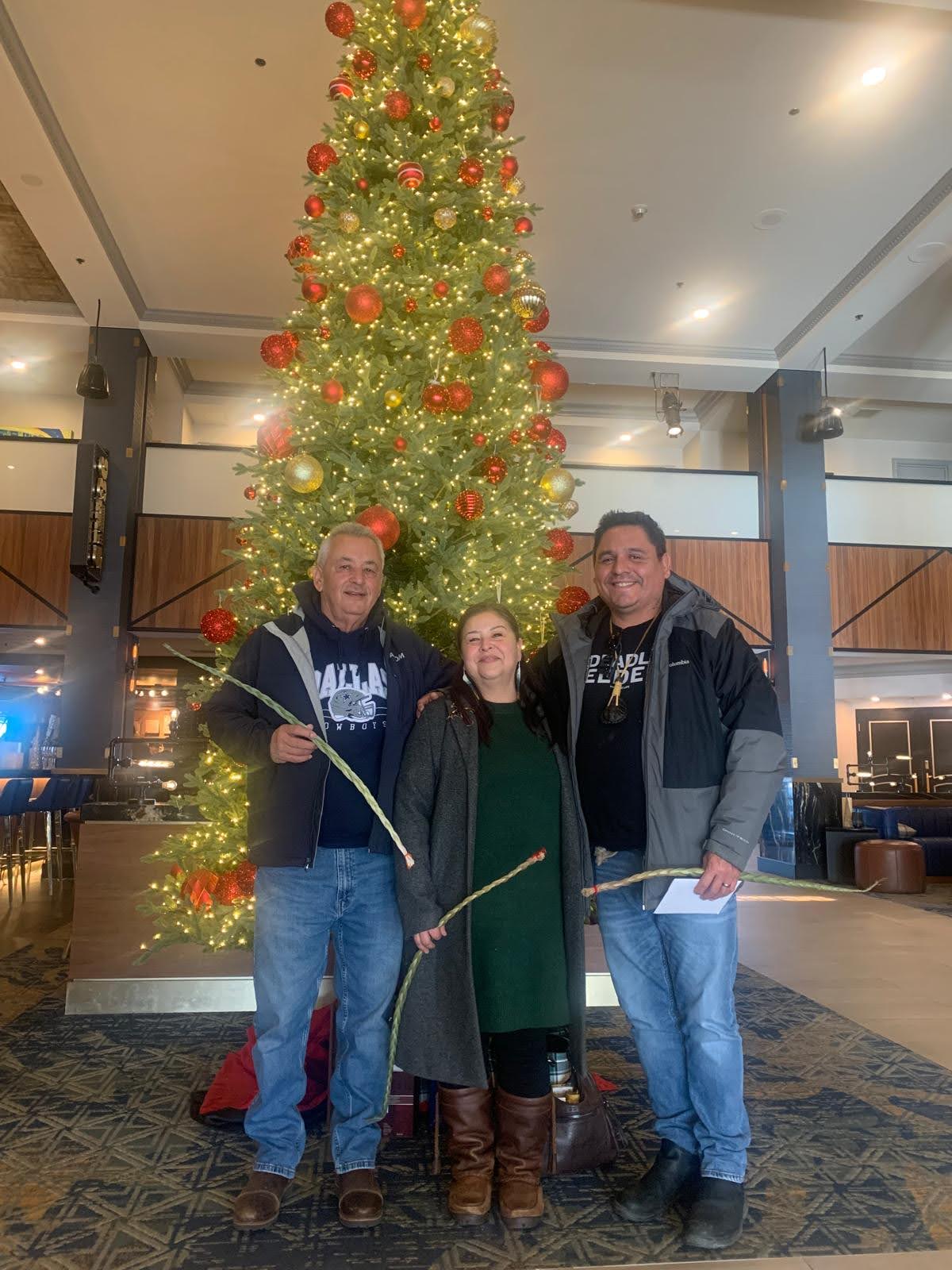
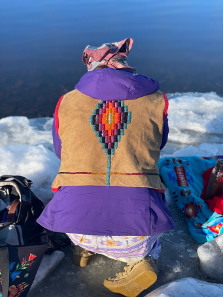
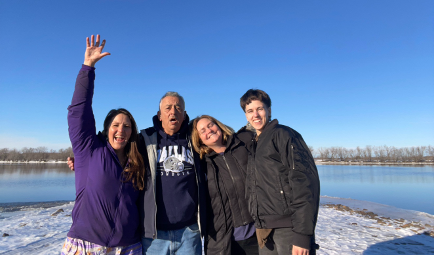
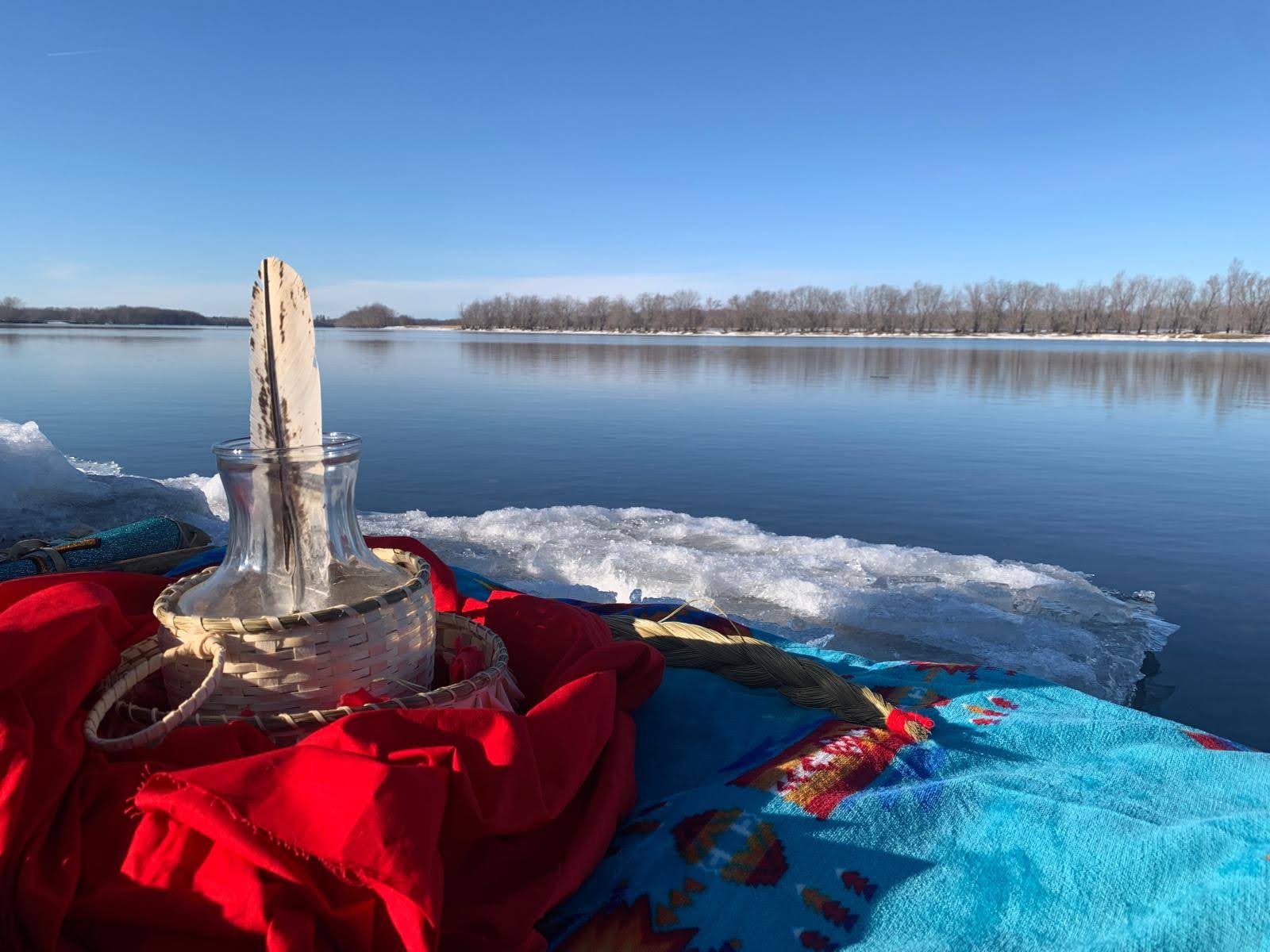
From top left: Elder Ed Perley, Elder Ramona Nicholas, Terry Young; Erin Dixon; The basket; Erin, Elder Ed, Mary-Kate and Jasmine.
Gathering Again Around the BaskeT
In January 2026, members of the RAD Leadership Circle: Steven Nitah, David Flood, Sam Whiteye, Dani Warren, and Gwen Bridge, gathered for a retreat in Beaver Valley, Ontario. It was the first time since the Vision Gathering that leadership had been physically together with the basket again. Rather than beginning with agendas or workplans, the gathering began with a day of ceremony and storytelling. The basket sat at the centre of the room, reminding everyone that leadership within RAD is not defined by titles, but by the willingness to carry responsibility in relationship to land, Spirit, and future generations. From this space, priorities for the coming year began to take shape and were carried back to the wider RAD team.
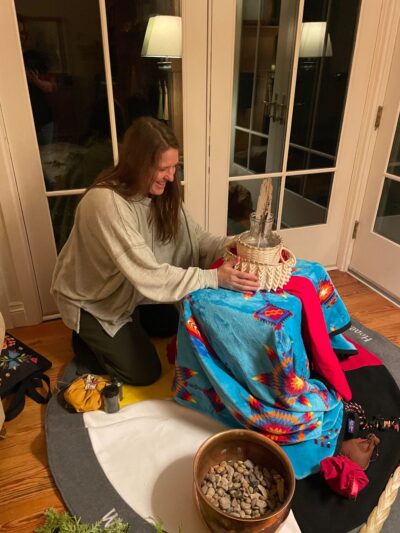
Erin and basket at RAD Leadership Gathering, Beaver Valley.
The Basket at the Indigenous Land Symposium
Soon after, the Vision Basket travelled to the Indigenous Land Symposium, where the RAD team hosted its first interactive visioning session centred around the basket.
The session, Community Land Visions: Reassuming Responsibility Towards Regenerative Futures, invited participants to reconnect with land-based visions emerging in their own territories. As Erin Dixon reminded participants: “Responsibilities to the land begin and are nurtured through vision– this is what the basket reminds us.”
During the ILS, the basket also received a new foundation. Traditional Knowledge Keeper Chuck Commanda, a master birch bark canoe builder from Kitigan Zibi Anishinabeg First Nation and grandson of Elder William Commanda, together with his apprentice Amberly Quakegesic from Chapleau Cree First Nation, created a birch bark tray for the basket to rest within.
Just as the ash basket holds the soils and visions gathered in 2023, the birch bark tray now carries the basket itself, a strong foundation rooted in the intergenerational continuation of knowledge and craft.
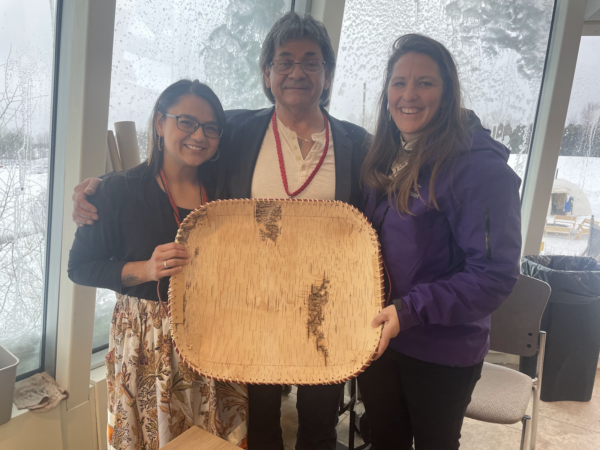
Amberly Quakegesic, Chuck Commanda and Erin Dixon with the birch tray
A Living Teaching and a Growing Bundle
The RAD Vision Basket continues its journey across Turtle Island as both a living teaching and a growing bundle. It carries soils from many territories and holds the memory of the teachings, relationships, and responsibilities that emerged during the Vision Gathering. As the basket moves from place to place in its snake dance, it continues to create space for people to reconnect with their own land-based visions and responsibilities.
The basket reminds us that transformation begins with vision, is held together through relationship, and moves forward through responsibility to land. The work of restoring lands, asserting Indigenous jurisdiction, and defending life systems cannot be carried by any single organization or community alone. We are stronger together. RAD exists to create the space where those relationships, and the visions they carry, can continue to grow.